
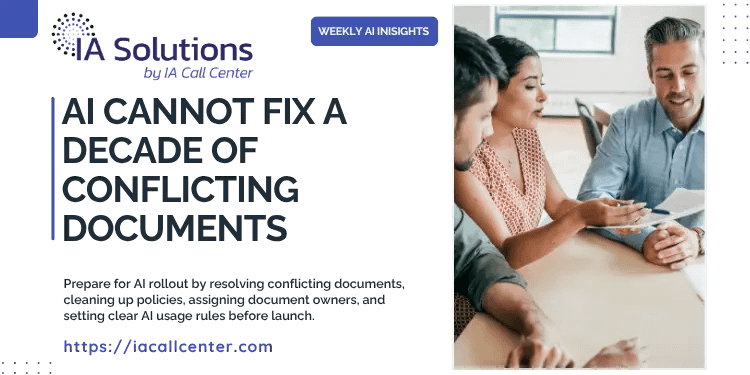
Before the tool goes live, give it one reliable source of truth.
An AI assistant can retrieve an answer in seconds. But if the policy library contains three versions of that answer, speed only helps it deliver the wrong one faster.
The model is only as dependable as the material—and the operating rules—behind it.
Clean up the source.
Archive outdated files, resolve conflicting guidance, and establish one approved place for current information. If the team cannot tell which document is right, the AI will not know either.
Write for retrieval.
Use descriptive headings and self-contained sections. Replace “as noted above” with the actual rule, and document the exceptions that experienced employees may know only from memory.
Give every document an owner.
A named owner and review date keep today’s trusted source from becoming next year’s stale answer.
Four things to put in writing
- Which AI tools employees may use
- What information is green, yellow, or red
- Which outputs require human sign-off
- Who handles a wrong, strange, or risky answer
One useful step this week: Choose one AI use case and audit the ten documents it will rely on most. Look for conflicting versions, missing owners, old review dates, and exceptions that have never been written down.
Bonus tip: Ask one veteran employee: “What exception do new hires usually learn the hard way?” If the answer is not documented, your AI will miss it too.
Preparing your team for an AI rollout?
Ian would be glad to compare notes on the documentation, guardrails, and ownership needed before launch.
Talk with Ian: Schedule a Conversation with Ian


